Monday, September 29, 2014

Hare's Ear Emerger

The summer is over, and as the days are getting shorter and weather colder I am finishing preparations for the grayling season.


One of the key steps is to ensure that I am fully stocked on this little fly. I am not sure what exactly makes it succeed, but its appeal to grayling is undeniable. I would feel naked having to face a dry fly situation without an ample supply.


The tie:
#18 Dohiku 301 dry fly hook
grey Sheer 14/0 tying thread
3 strands of orange Krystal flash
body of Hare's Ear dubbing
ribbed with Gütermann sulky tinsel
wing of 3 CDC feather tips
thoras / leggs from hare mixed with squirrel

Monday, September 22, 2014

Výrovka / Eagle Owl fly

September is here, the Czech trout season closed and the Grayling are starting to get serious. It is high time to finish replenishing the fly boxes and get to the river.


The Eagle Owl fly is a staple in my fly box. It might seem small in stature, but it is great in appeal. The body of an owl feather has appeal to both fish and fishermen bordering on magical.

Thursday, September 4, 2014

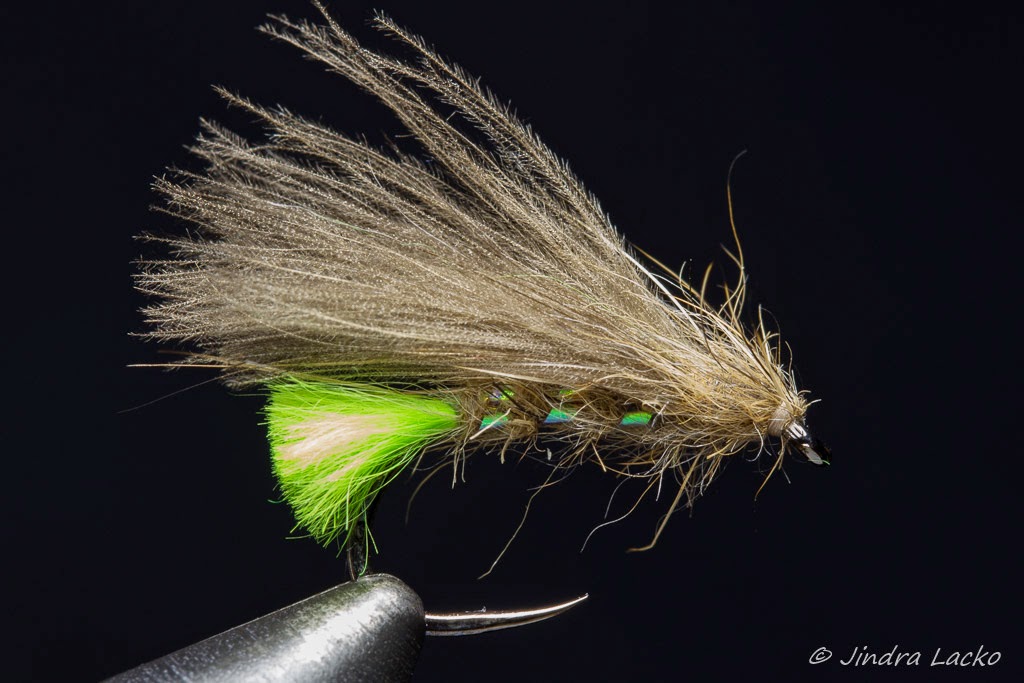
Ohře Caddis

The river Ohře is known in Czech fly fishing circles for two reasons: the massive and reliable caddis hatch and the real opportunity of a sizable fish striking on a dry fly. With these two aspects in mind I created the following imitation.


It is tied on a wet fly hook, providing more leverage than a regular dry fly hook in the unlikely but oh so much desired event that a real lunker would deign to strike. On most of my river fishing I opt for the lighter gauge hooks, forsaking holding power for finesse, but some rivers and some situations reqire the real thing to actualy net the fish.

The tie:
#12SL Dohiku W hook
tan elastic tying thread
homemade Chrartreuse rabbit fur tag
#12 UNI pearl mylar ribbing
hare fur dubbing for body
4 CDC feather tips for wing
hare & squirrel dubbing for thorax

Wednesday, August 13, 2014

Rhyacophila larva

On a recent fishing trip I brought a couple of insect life samples to play with. I still need a (rather large) bit of practice to acheive the level of my aquatic macrophotography hero Jan Hamrský but I am starting to like my macro shots. A good first step :)


This is a Rhyacophila caddis fly larva, a subject dear to the heart of a fly fisherman (and to the stomach of a grayling fish). It is rumored these were the original inspiration for Czech and Polish style nymphs.

They have a tendency to form a curved position when disturbed, but rarely assume the C shaped position of a typical gammarus hook. Never the less, on streams where Rhyacophila are abundant a sickly green Czech style nymph will not disappoint.

Monday, August 4, 2014

Emerging Caddis

This is not a grayling fly, but  a wet trout fly. Especially targetted for a river I know that has a good population of sizable brownies. They seem hidden for the whole day, especially in the high summer, but become alive at dusk when the big caddis flies hatch.


With the low light the color of your imitation is becoming less important, and what matters is the general shape and movement of your fly.

Especially effective is the "rising caddis style" - a lightly weighted imitation fished sunk across the stream, with a gentle lift at the end of the drift. That is the moment when a violent strike is supposed to happen :)


The tie:
#10 Kamasan B110 grubber hook, debarbed
a layer of flat lead
yellow 6/0 Danville's tying thread
body from Jamieson's of Shetland wool, color Wren
4 strands of pearl Flashabou
3 CDC feathers for wing
a light touch of Fox Squirrel dubbing mixed with Hare

Wednesday, July 30, 2014

Pink bug

The color pink is one of the worst kept secrets of grayling fishing. Used and abused by most every grayling fisherman since time immemorial.

But you would ignore it to your peril - it works. And who knows, you might fool a brown trout or two as well...


The tie:
#8 Kamasan B160 grubber hook (debarbed)
a layer of flat lead wire
Danville's 70 dernier tying thread, purple
Jamieson's Shetland Spindrift wool, color sorbet

Thursday, June 12, 2014

Gammarus - the original and the imitation

The Gammarus is an amphipod close to the heart of most fly fishermen, scorned only by a small - though vocal and influential - group of dry fly purists.

And for a good reason, for it is the pork & beans equivalent of the trout and grayling diet. The Danica or Baetis mayflies are seasonal insects, one week appearing in huge numbers, the next week gone for the year. The humble gammarus stays on the menu all year long.


This little guy is Gammarus roeseli, one of the many species of the genus that inhabits fresh waters of Central Europe. It is interesting to note its main features: curved shape, nondescript grayish color with hues of green and accents of a more bright color + large number of legs.


Given the popularity of gammarus it is not surprising that there are many fly patterns around, plus a number of very life like imitations by fly dressers from the extreme imitation school.

I have found that the most simple imitation often works the best, and with this idea in mind I tied the simple woolen imitation shown above. It is nothing more than a size #8 scud hook, lightly weighted and wrapped in Shetland Spindrift Wool.

The nondescript color and shaggy look with lots of movement make it attractive to Grayling - and the ease with which it is replaced is very welcome to a lazy fly dresser.